La Paz Airport: One of the Highest International Airports on Earth
El Alto International Airport (LPB) — La Paz, Bolivia
Published August 21, 2026
LPB
IATA code
2.6M (2023)
Passengers
1
Terminals
11 km
To city center
Only here
One of the highest international airports on Earth
El Alto International sits at roughly 4,061 meters (13,325 feet) above sea level, genuinely one of the highest international airports anywhere in the world — high enough that some airlines advise passengers about altitude effects, and aircraft require longer runways to compensate for the thinner air.
Getting there, at a glance
Taxi
60–100 BOB
~20–25 min
Fixed-rate counter inside arrivals
Teleférico + taxi
Cheaper combined option
Variable
La Paz's famous cable-car transit system
✈️ What kind of flight are you taking?
Arrive at the airport
2 hours
Typical security wait
15–20 min
Peak-hour wait
25–35 min
Amenities, at a glance
Wifi
Free, time-limited session
Lounges
Priority Pass-affiliated lounges
Duty-Free
Bolivian alpaca wool goods, coca products
Dining
Bolivian cuisine
Book & Save
These are affiliate links — we may earn a commission if you book through them, at no extra cost to you.
El Alto International Airport (IATA: LPB) is Bolivia’s main international gateway and the primary hub of Boliviana de Aviación (BoA), with more than 3 million passengers a year. It sits about 11 km from central La Paz, in the city of El Alto, which itself sits above La Paz.
Overview
LPB operates a single terminal and holds a genuinely extreme distinction: at roughly 4,061 meters (13,325 feet) above sea level, it’s one of the highest international airports anywhere on Earth. The altitude is significant enough that some airlines advise arriving passengers about potential effects, and the thin air requires notably longer runways for safe takeoffs and landings. LPB handled about 2.6 million passengers in 2023, up 5.2% on the previous year as regional post-pandemic travel continued recovering — modest by global standards, but reflecting steady growth for Bolivia’s main gateway.
Terminals
LPB operates around a single terminal, handling both regional and international traffic, including the full network of Boliviana de Aviación.
Airlines
Boliviana de Aviación (BoA), Bolivia’s state-owned flag carrier, operates its principal hub at LPB, with an extensive domestic network across Bolivia’s dramatic and varied terrain alongside international routes to neighboring South American countries and beyond. That network makes LPB the essential gateway for travel throughout Bolivia.
Getting There
- Taxi: 60–100 BOB to central La Paz via the fixed-rate counter inside arrivals, about 20–25 minutes.
- Teleférico + taxi: A cheaper combined option using La Paz’s famous cable-car transit system, which connects El Alto (where the airport sits) down to La Paz proper — a genuinely unique and scenic way to descend into the city.
Prices above are approximate and subject to change — always check current fares with the taxi counter or Mi Teleférico.
Security and Passport Control Wait Times
- Regional flights: Security plus immigration for most South American routes. Typically 15–20 minutes during off-peak hours, up to 25–35 minutes during busy periods.
- International flights: Security plus passport control. Typically 20–30 minutes during off-peak hours, up to 35–50 minutes during peak international departure banks.
- LPB generally processes passengers efficiently given its more moderate overall traffic volume.
Parking
The terminal has adjacent short- and long-stay parking, with clear signage.
Wifi
Free wifi is available in the terminal with a time-limited free session.
Best Times to Arrive
- Regional flights: Arrive 2 hours before departure.
- International flights: Arrive 3 hours before departure, especially during peak international departure periods.
- Given the altitude, some travelers experience mild effects upon arrival — take it easy for the first day if you’re not acclimatized, rather than rushing straight into a packed itinerary.
Where to Eat
LPB has a good selection of Bolivian cuisine alongside limited international options, spread across the terminal.
Lounges
Several Priority Pass-affiliated lounges are available for eligible passengers, elite status holders, or paid access.
Duty-Free Shopping
LPB’s duty-free area includes genuinely Bolivian specialties — alpaca wool goods and coca-based products — alongside the usual international fashion, cosmetics, and electronics brands.
Airport Map
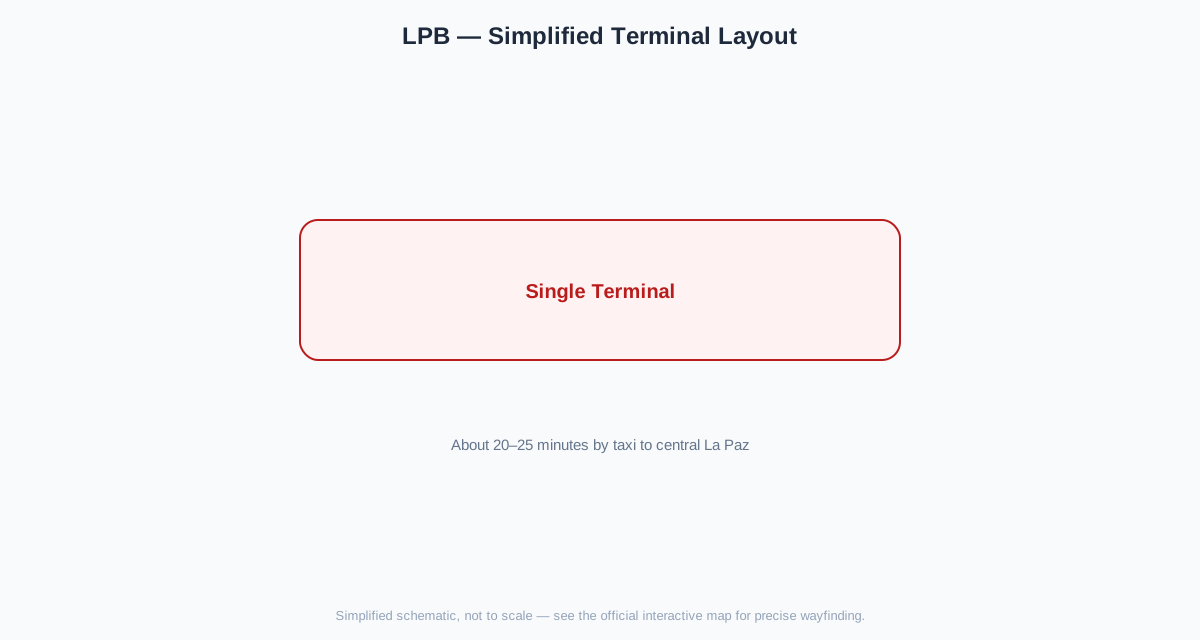
This is a simplified layout for orientation — for precise gate-by-gate navigation, use the official AASANA airport resources.
Useful Links
- Official airport website (AASANA — Administración de Aeropuertos y Servicios Auxiliares a la Navegación Aérea) — terminal information, services, live flight status.
- Boliviana de Aviación — flight schedules and connections.
Layover Tips
- With 4 hours or more and a visa situation that allows entry, central La Paz is reachable by taxi in about 20–25 minutes, or via the scenic Teleférico cable-car system.
- If staying airside, take it easy given the altitude — even a short walk through the terminal can feel more tiring than expected at over 4,000 meters.
- Given LPB’s extreme elevation, if your itinerary continues to lower-altitude destinations in Bolivia, be aware that some travelers feel notably better once they descend — plan accordingly if altitude affects you.
Related airports
 ATL
ATL Atlanta Hartsfield-Jackson Airport: The World's Busiest Airport Train
Atlanta, United States
Atlanta's Hartsfield-Jackson runs the world's busiest airport train. Transport into the city, security wait times, parking, wifi, and lounges covered.
 BOG
BOG Bogotá El Dorado Airport: One of the World's Highest Major Airports
Bogotá, Colombia
Bogotá's El Dorado sits nearly 2,550 meters above sea level. Transport into the city, security wait times, parking, and lounges.
 BSB
BSB Brasília Airport: Landing in a City Shaped Like an Airplane
Brasília, Brazil
Brasília's airport serves a UNESCO-listed modernist capital deliberately laid out in the shape of an airplane. Transport, security, and lounges.