Miami International Airport: The Busiest Gateway to Latin America
Miami International Airport (MIA) — Miami, United States
Published August 12, 2026
MIA
IATA code
56M (2024)
Passengers
3 concourses (North, Central, South)
Terminals
13 km / 8 mi
To city center
Only here
More flights to Latin America than anywhere else in the US
MIA operates more flights to Latin America and the Caribbean than any other US airport, earning it the nickname "Gateway of the Americas" — a huge share of trade and travel between the US and the region routes through here.
Getting there, at a glance
Miami Metrorail (Orange Line)
$2.25
~30 min
Cheapest option to downtown
Taxi
~$35–50
~20–30 min
Flat rate to most zones
Uber / Lyft
$25–40
~20–30 min
Price varies with demand
✈️ What kind of flight are you taking?
Arrive at the airport
2 hours
Typical security wait
20–30 min
Peak-hour wait
35–50 min
Amenities, at a glance
Wifi
Free, unlimited
Lounges
American Admirals Club, Centurion + Priority Pass
Duty-Free
Standard international selection
Dining
Cuban coffee windows, Latin American cuisine
Book & Save
These are affiliate links — we may earn a commission if you book through them, at no extra cost to you.
Miami International Airport (IATA: MIA) is American Airlines’ largest international gateway and the principal US hub for travel to Latin America and the Caribbean, handling nearly 56 million passengers a year. It sits about 13 km (8 mi) west of downtown Miami — notably close for a major US hub.
Overview
MIA operates as a single large terminal complex divided into North, Central, and South sections, each with its own set of concourses. Its defining role is as the “Gateway of the Americas” — more flights depart MIA for Latin America and the Caribbean than from any other US airport, making it a genuinely distinctive hub within the American aviation landscape, more international in character than most US airports of similar size. The Miami-Dade Aviation Department reported nearly 56 million passengers for 2024 — a third consecutive annual record, split roughly between 30.8 million domestic and 25.2 million international travelers.
Terminals
- North Terminal (Concourse D): American Airlines’ primary concourse, handling the bulk of its domestic and Latin American network.
- Central Terminal (Concourses E, F, G): A mix of international carriers and additional American Airlines gates.
- South Terminal (Concourses H, J): International long-haul carriers, including many Latin American and European airlines.
All sections are connected by the free MIA Mover automated train, which also links to the rental car center.
Airlines
American Airlines operates its largest international hub at MIA, anchoring the North Terminal with an extensive network across Latin America, the Caribbean, and beyond, alongside significant domestic and transatlantic routes. That concentration makes MIA one of the best-connected airports in the world for travel between the US and the region south of it.
How to Get There
- Miami Metrorail (Orange Line): $2.25 one-way, the cheapest option, about 30 minutes to downtown Miami with a free connection via the MIA Mover to the Metrorail station.
- Taxi: Flat rates apply to most zones — typically $35–50 to downtown or South Beach, about 20–30 minutes depending on traffic.
- Uber / Lyft: Generally $25–40 depending on demand, about 20–30 minutes.
Prices above are indicative and can change — always check current fares with Miami-Dade Transit or your ride-hailing app.
Getting Through Security and Passport Control
Like other US airports, MIA has no departure passport control — only TSA security screening, for both domestic and international departures:
- Domestic departures (TSA only): Typically 20–30 minutes off-peak, up to 35–50 minutes during busy periods.
- International departures (TSA only): Similar TSA process to domestic, typically 25–35 minutes off-peak, up to 45–65 minutes at peak — MIA’s huge Latin America departure volume means certain evening banks get busy.
- Arriving internationally? Customs and Border Protection (CBP) processing happens on arrival, separate from departure security — MIA handles an enormous volume of international arrivals, so budget extra time if connecting onward.
Parking
MIA has extensive parking directly at the terminal plus more affordable economy options connected by shuttle. Pre-booking online is generally cheaper than the walk-up rate.
Wifi
Free, unlimited wifi is available throughout the terminal with no time limit.
Best Times to Arrive
- Domestic flights: Arrive 2 hours before departure.
- International flights: Arrive 3 hours ahead, especially for the heavy evening departure banks to Latin America and the Caribbean.
- Given MIA’s outsized role as a Latin America gateway, flights to that region can see particularly high check-in and security volume during peak holiday travel periods — build in extra buffer around major Latin American holidays.
Where to Eat
MIA’s food scene stands out among US airports for its genuine Latin American character — Cuban coffee windows (order a colada and watch locals do the same) and a strong lineup of Latin American cuisine alongside the usual national chains, spread across all three terminal sections.
Lounges
- American Admirals Club lounges are extensive given American’s hub presence, and a Centurion Lounge is also available, both accessible with eligible tickets, elite status, or membership.
- Several Priority Pass-affiliated lounges are available as well.
Duty-Free Shopping
MIA’s duty-free selection is fairly standard for a major US gateway — fashion, cosmetics, and electronics — spread across the international departure areas of all three terminal sections.
Airport Map
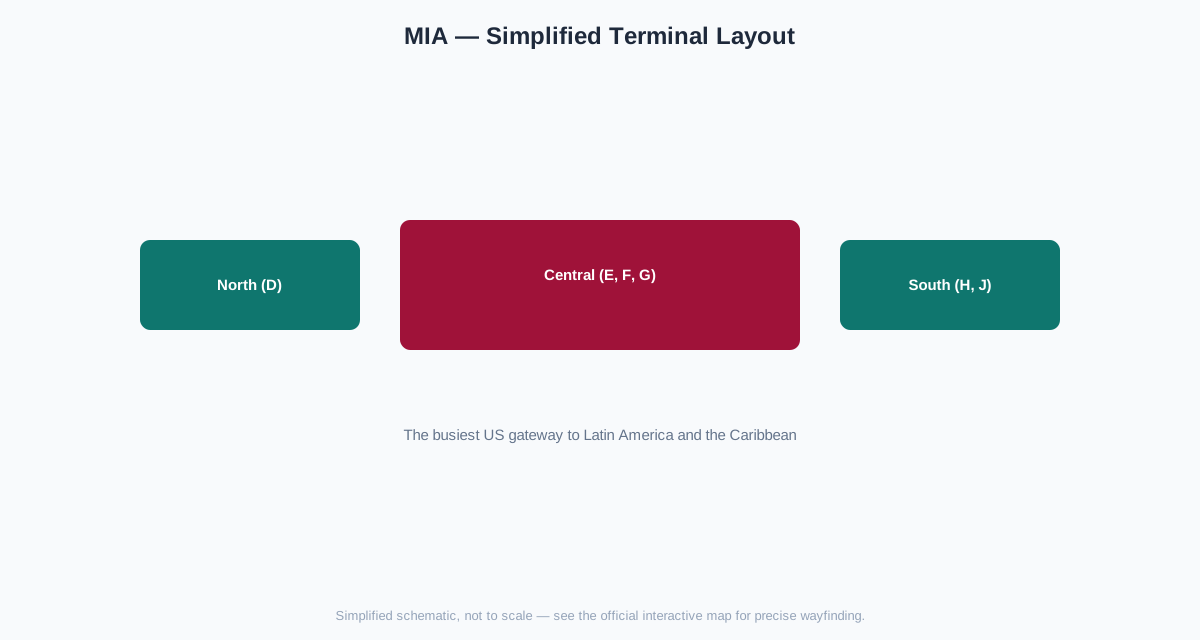
This is a simplified layout to help you get oriented — for real-time, gate-by-gate wayfinding, use MIA’s official resources.
Useful Links
- Official airport site (Miami International Airport) — terminal info, services, live flight status.
- Miami-Dade Transit — Metrorail fares and schedules.
- TSA — security wait times and PreCheck
Long Layover Tips
- With 5+ hours, South Beach is reachable via Uber/Lyft in about 25–30 minutes — a quick taste of the beach and Art Deco district is realistic on a longer layover.
- If staying airside, grab a Cuban coffee at one of the airport’s classic ventanitas (coffee windows) — a small but genuine taste of Miami culture without leaving the terminal.
- Given MIA’s role as the main US-Latin America gateway, if you’re connecting internationally, double-check whether your onward flight requires re-clearing security, since MIA’s mix of domestic and international connections isn’t always a simple walk between gates.
Related airports
 ATL
ATL Atlanta Hartsfield-Jackson Airport: The World's Busiest Airport Train
Atlanta, United States
Atlanta's Hartsfield-Jackson runs the world's busiest airport train. Transport into the city, security wait times, parking, wifi, and lounges covered.
 BOG
BOG Bogotá El Dorado Airport: One of the World's Highest Major Airports
Bogotá, Colombia
Bogotá's El Dorado sits nearly 2,550 meters above sea level. Transport into the city, security wait times, parking, and lounges.
 BSB
BSB Brasília Airport: Landing in a City Shaped Like an Airplane
Brasília, Brazil
Brasília's airport serves a UNESCO-listed modernist capital deliberately laid out in the shape of an airplane. Transport, security, and lounges.