New York JFK Airport: Sleep, Eat, or Swim at the TWA Hotel
John F. Kennedy International Airport (JFK) — New York, United States
Published August 9, 2026
JFK
IATA code
63.3M (2024)
Passengers
5 active
Terminals
26 km / 16 mi
To city center
Only here
Check out the TWA Hotel
Built inside Eero Saarinen's iconic 1962 TWA Flight Center next to Terminal 5, the TWA Hotel is open to visit even if you're not staying — the retro lounge and runway-view pool bar are worth the detour.
Getting there, at a glance
AirTrain + Subway
$11.75 total
~60–80 min
Cheapest, 24 hours
AirTrain + LIRR
$14–$16 total
~35–45 min
Fastest public transit
Yellow Taxi (flat)
$70 to Manhattan
~45–60 min
+tolls/tip, +$5 rush fee
✈️ What kind of flight are you taking?
Arrive at the airport
2 hours
Typical security wait
20–35 min
Peak-hour wait
45–60 min
Amenities, at a glance
Wifi
Free session, then paid
Lounges
Delta Sky Club, Admirals
Duty-Free
Fashion, NYC souvenirs
Dining
Celebrity-chef spots, T4
Hotel
TWA Hotel, at Terminal 5
Book & Save
These are affiliate links — we may earn a commission if you book through them, at no extra cost to you.
New York’s John F. Kennedy International Airport (IATA: JFK) is the busiest of the three major New York City airports and the main international gateway to the city, with a huge concentration of transatlantic and long-haul flights. It sits in Queens, about 26 km southeast of Manhattan, and is Delta’s largest hub alongside a major JetBlue and international-carrier presence.
Overview
JFK is laid out around a circular perimeter road (the old “Terminal City” loop) linking its terminals, with the AirTrain people-mover running the same loop plus a spur out to the subway and Long Island Rail Road. The airport is in the middle of a huge, multi-year redevelopment — several older terminals have already been replaced or are being replaced by the new New Terminal One, so signage and terminal numbers can shift; always double check your terminal on the day of travel. The Port Authority of New York and New Jersey confirmed JFK processed 63.3 million passengers in 2024, a new individual annual record, up 1% on 2023 and just above the 2019 pre-pandemic level.
Terminals
JFK currently operates five active terminals: 1, 4, 5, 7, and 8 (former Terminals 2 and 3 have closed as part of the New Terminal One redevelopment, which will eventually consolidate several of these). Terminal 4 is the largest and hosts Delta’s international flights and many SkyTeam and other foreign carriers; Terminal 5 is JetBlue’s home; Terminal 8 (American Airlines/oneworld) and Terminal 7 round out the rest. The free AirTrain connects all terminals, parking, and the subway/LIRR station in about 5–10 minutes between any two points.
Airlines
Delta is JFK’s dominant carrier and uses it as a major international hub, alongside JetBlue (based in Terminal 5) and American Airlines (Terminal 8). JFK is also the primary New York gateway for the vast majority of foreign flag carriers — British Airways, Air France, Emirates, Cathay Pacific, and dozens more — making it one of the most internationally connected airports in North America.
How to Get There
- AirTrain + Subway: $11.75 total ($8.75 AirTrain + $3.00 subway) — the cheapest way into the city, via the A/E/J/Z lines from Jamaica or Howard Beach stations. About 60–80 minutes to Midtown Manhattan.
- AirTrain + LIRR: $14–$16 total ($8.75 AirTrain + a Long Island Rail Road CityTicket fare) — the fastest public transit option, about 35–45 minutes from Jamaica Station to Penn Station.
- Yellow Taxi (flat rate): $70 flat fare to anywhere in Manhattan (set by the NYC Taxi and Limousine Commission), plus tolls and tip — expect a total closer to $85–$95. A $5 rush-hour surcharge applies weekdays 4–8pm. About 45–60 minutes depending on traffic.
- Ride-hailing: Uber and Lyft operate from a dedicated pickup area; pricing is dynamic and can exceed the yellow taxi flat rate during surge periods.
Prices above are indicative and can change — always check the operator’s site for the current fare: MTA, NYC TLC.
Getting Through Security and Passport Control
JFK’s process is split differently than at EU airports — there’s no outbound passport control in the US, only TSA security screening for all departing passengers:
- Domestic departures (TSA security only): Typically 20–35 minutes off-peak, up to 45–60 minutes during morning and early-evening banks. TSA PreCheck (where enrolled) cuts this dramatically.
- International departures (TSA security only): Similar TSA queues to domestic, typically 30–45 minutes off-peak, up to 60–90 minutes at peak — the wait comes from higher passenger volume at international-heavy terminals like T4, not from a separate passport check.
- Arriving internationally? Budget extra time for U.S. Customs and Border Protection (CBP) on arrival — this is where the notoriously long JFK queues happen, especially when several wide-body flights land close together; 45–90+ minutes is common at peak, longer during holidays. Global Entry can skip most of this line if you’re enrolled.
Parking
All five terminals have adjacent short-term parking garages, plus larger economy lots served by free AirTrain/shuttle connections. As with most major airports, pre-booking online is meaningfully cheaper than the terminal walk-up rate, especially for stays of several days.
Wifi
Free wifi (via Boingo) is available across JFK, typically with a free introductory session before switching to paid tiers or slower speeds — coverage and exact limits vary by terminal. An eSIM is a solid backup if you need guaranteed connectivity.
Best Times to Arrive
- Domestic flights: Arrive 2 hours before departure; push to 2.5 hours during the 06:00–09:00 and 16:00–19:00 peak banks.
- International flights: Arrive 3 hours ahead — TSA lines at internationally-heavy terminals (T4 especially) get busy fast in the evening long-haul departure wave.
- If you’re arriving from an international flight with a tight connection, budget significant extra time for CBP — 90+ minutes isn’t unusual during peak arrival banks.
- TSA PreCheck and Global Entry (via the Trusted Traveler Programs) are well worth enrolling in if you fly through JFK regularly.
Where to Eat
JFK has built a reputation as one of the better US airports for food, particularly in Terminal 4’s food hall, which features outposts of well-known NYC restaurants and chefs alongside the usual fast-food chains. Terminal 5 (JetBlue) also has a strong, JFK-Mood-Board-worthy food scene for a domestic terminal. Inside the TWA Hotel, Paris Café by Jean-Georges occupies the footprint of the original 1962 Paris Café and Lisbon Lounge, and the food hall has genuinely New York names like Fly-By Bagels and Feltman’s of Coney Island hot dogs.
Airport Hotel
The TWA Hotel at Terminal 5, built inside Eero Saarinen’s landmark 1962 TWA Flight Center, is open to visit even if you’re not staying — the retro Sunken Lounge and a converted Lockheed Constellation aircraft turned cocktail bar are worth the detour on their own, on top of Paris Café and the food hall.
Lounges
- Delta Sky Club locations in Terminal 4, available with eligible Delta tickets, elite status, or membership.
- Admirals Club (American Airlines) in Terminal 8.
- Several Priority Pass-affiliated lounges are scattered across terminals, useful with the right travel credit card.
Duty-Free Shopping
Terminal 4’s departures area has the largest duty-free selection — fashion, electronics, and New York-themed souvenirs — with smaller selections in the other terminals geared toward last-minute essentials and gifts.
Airport Map
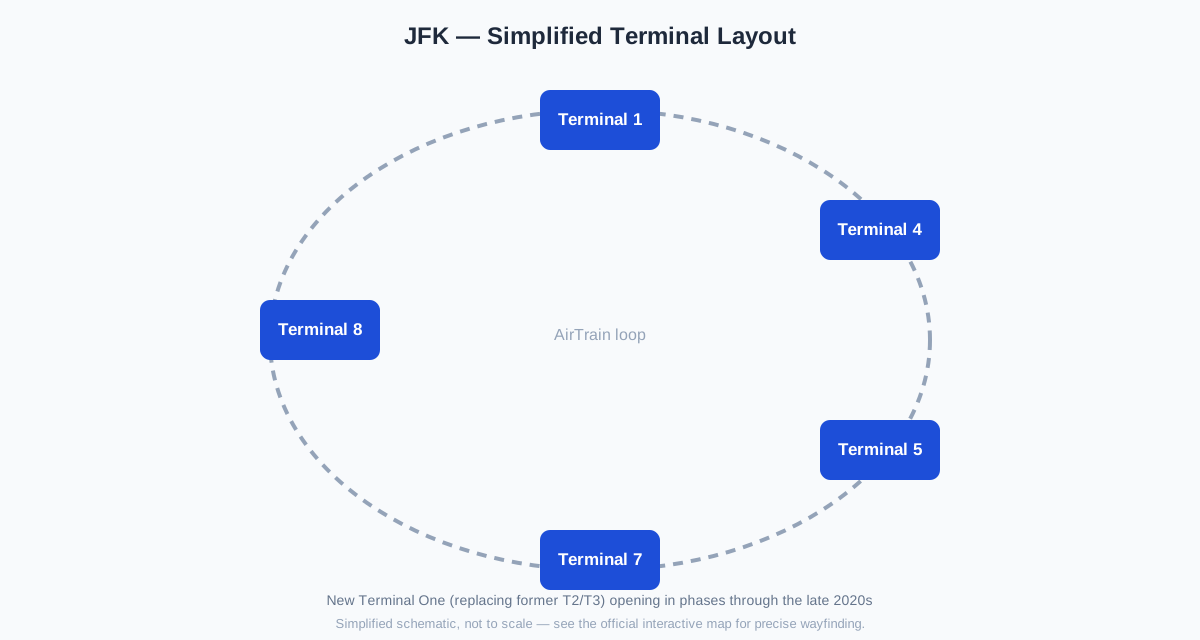
This is a simplified layout to help you get oriented — for real-time, gate-by-gate wayfinding, use JFK’s official interactive map.
Useful Links
- Official airport site (JFK Airport / Port Authority) — terminal info, services, live flight status.
- Interactive terminal map — find gates, shops, and dining.
- MTA — subway & AirTrain info
- NYC Taxi & Limousine Commission — official flat-rate rules.
- TSA — security wait times & PreCheck
Long Layover Tips
- With 6+ hours and a US visa/ESTA that allows re-entry, a trip into Manhattan is feasible via AirTrain+LIRR — but budget generously for CBP if you’re arriving internationally, plus the return TSA line.
- If staying airside, Terminal 4 and Terminal 5 have the most comfortable seating and best food options for a long wait.
- There’s no free airside sleep lounge — a Priority Pass day-pass or a paid rest area (available in some terminals) is worth it for overnight layovers.
Related airports
 ATL
ATL Atlanta Hartsfield-Jackson Airport: The World's Busiest Airport Train
Atlanta, United States
Atlanta's Hartsfield-Jackson runs the world's busiest airport train. Transport into the city, security wait times, parking, wifi, and lounges covered.
 BOG
BOG Bogotá El Dorado Airport: One of the World's Highest Major Airports
Bogotá, Colombia
Bogotá's El Dorado sits nearly 2,550 meters above sea level. Transport into the city, security wait times, parking, and lounges.
 BSB
BSB Brasília Airport: Landing in a City Shaped Like an Airplane
Brasília, Brazil
Brasília's airport serves a UNESCO-listed modernist capital deliberately laid out in the shape of an airplane. Transport, security, and lounges.