Quito Airport: Land Between Snow-Capped Volcanoes on Your Way to the Galápagos
Mariscal Sucre International Airport (UIO) — Quito, Ecuador
Published August 21, 2026
UIO
IATA code
5.3M (2024)
Passengers
1
Terminals
18 km
To city center
Only here
Land between snow-capped volcanoes on your way to the Galápagos
Sitting at more than 2,400 meters above sea level and ringed by snow-capped Andean volcanoes, Quito's airport offers a genuinely dramatic approach — and for many travelers, it's also a connecting point on the way to the Galápagos Islands, one of the world's most famous wildlife destinations.
Getting there, at a glance
Aeroservicios shuttle bus
8 USD
~45 min
Direct to central Quito
Taxi
25–35 USD
~40–45 min
Fixed-rate counter inside arrivals
Uber
Comparable to taxi
~40–45 min
Widely used in Quito
✈️ What kind of flight are you taking?
Arrive at the airport
2 hours
Typical security wait
15–25 min
Peak-hour wait
25–40 min
Amenities, at a glance
Wifi
Free, time-limited session
Lounges
LATAM VIP Lounge + Priority Pass
Duty-Free
Ecuadorian chocolate, Panama hats
Dining
Ecuadorian cuisine
Hotel
Wyndham, 5-min walkway
Book & Save
These are affiliate links — we may earn a commission if you book through them, at no extra cost to you.
Mariscal Sucre International Airport (IATA: UIO) is Ecuador’s main gateway alongside Guayaquil. UIO closed 2024 with about 5.3 million passengers, a roughly 1% dip from 2023 that left traffic essentially stable. It sits about 18 km east of central Quito, high in the Andes.
Overview
UIO operates a single terminal and offers one of the more dramatic arrivals in South American aviation: the airport sits at more than 2,400 meters above sea level, surrounded by snow-capped volcanoes visible on a clear day. For many international travelers, UIO also functions as a key connecting point on the way to the Galápagos Islands, one of the world’s most celebrated wildlife destinations.
Terminals
UIO operates around a single terminal, handling both regional and international traffic, including Ecuador’s main international carriers.
Airlines
LATAM Airlines operates an extensive network from UIO, connecting Ecuador to destinations across South America, North America, and Europe. Avianca and other carriers also serve Quito directly, making it one of the best-connected gateways in the northern Andes region, alongside its role as a stepping stone to the Galápagos.
Getting There
- Aeroservicios shuttle bus: 8 USD, a direct service to central Quito, about 45 minutes.
- Taxi: Typically 25–35 USD via the fixed-rate counter inside arrivals, about 40–45 minutes given the airport’s distance from the city.
- Uber: Generally comparable in price to a taxi, about 40–45 minutes.
Prices above are approximate and subject to change — always check current fares with the shuttle counter or your rideshare app.
Security and Passport Control Wait Times
- Regional flights: Security plus immigration for most South American routes. Typically 15–25 minutes during off-peak hours, up to 25–40 minutes during busy periods.
- International flights: Security plus passport control. Typically 25–35 minutes during off-peak hours, up to 40–60 minutes during peak international departure banks.
- UIO generally processes passengers efficiently despite significant tourist traffic tied to Galápagos connections.
Parking
The terminal has adjacent short- and long-stay parking, with clear signage.
Wifi
Free wifi is available in the terminal with a time-limited free session.
Best Times to Arrive
- Regional flights: Arrive 2 hours before departure.
- International flights: Arrive 3 hours before departure, especially during peak international departure periods.
- If connecting onward to the Galápagos, note that inter-island flights typically depart from Quito or Guayaquil separately — confirm your full itinerary in advance.
Where to Eat
UIO has a good selection of Ecuadorian cuisine alongside international chains, spread across the terminal. At the Wyndham, Gran Cóndor is the main restaurant.
Airport Hotel
The Wyndham Quito Airport is about a 5-minute walk from the terminal via a signposted walkway, with a free shuttle also running every half hour around the clock. Beyond Gran Cóndor, it has a pool, gym, and spa — a solid option before or after a Galápagos connection.
Lounges
- The LATAM VIP Lounge is available for eligible business class passengers, elite status holders, or paid access.
- Several Priority Pass-affiliated lounges are also available.
Duty-Free Shopping
UIO’s duty-free area includes genuinely Ecuadorian specialties — chocolate and Panama hats (which, despite the name, originate in Ecuador) — alongside the usual international fashion, cosmetics, and electronics brands.
Airport Map
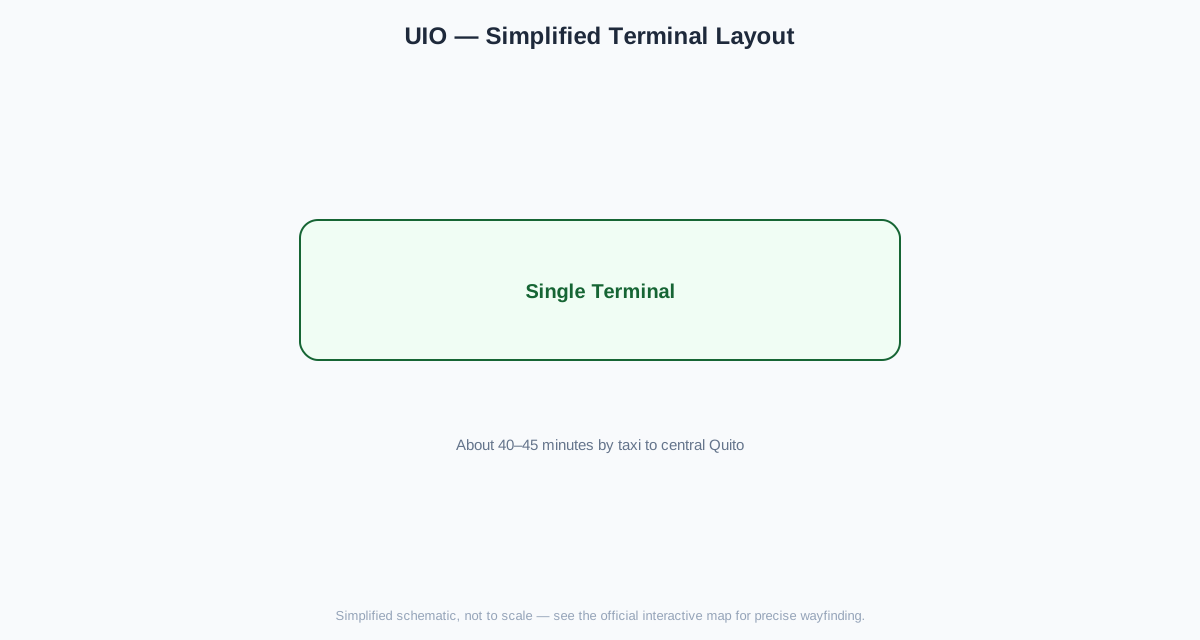
This is a simplified layout for orientation — for precise gate-by-gate navigation, use the official Quito Airport resources.
Useful Links
- Official airport website (Aeropuerto Internacional Mariscal Sucre) — terminal information, services, live flight status.
- LATAM Airlines — flight schedules and connections.
Layover Tips
- With 5 hours or more and a visa situation that allows entry, central Quito’s UNESCO-listed historic center is reachable via shuttle bus or taxi in about 40–45 minutes.
- If staying airside, take a moment to notice the volcano views on a clear day — genuinely one of the most dramatic airport settings in South America.
- If your onward trip is to the Galápagos Islands, confirm well in advance whether you’re flying via Quito or Guayaquil, and factor in the connection separately from your international arrival.
Related airports
 ATL
ATL Atlanta Hartsfield-Jackson Airport: The World's Busiest Airport Train
Atlanta, United States
Atlanta's Hartsfield-Jackson runs the world's busiest airport train. Transport into the city, security wait times, parking, wifi, and lounges covered.
 BOG
BOG Bogotá El Dorado Airport: One of the World's Highest Major Airports
Bogotá, Colombia
Bogotá's El Dorado sits nearly 2,550 meters above sea level. Transport into the city, security wait times, parking, and lounges.
 BSB
BSB Brasília Airport: Landing in a City Shaped Like an Airplane
Brasília, Brazil
Brasília's airport serves a UNESCO-listed modernist capital deliberately laid out in the shape of an airplane. Transport, security, and lounges.