Rio de Janeiro Galeão Airport: Request a Window Seat for the Approach
Rio de Janeiro–Galeão International Airport (Tom Jobim) (GIG) — Rio de Janeiro, Brazil
Published August 9, 2026

GIG
IATA code
14.4M (2024)
Passengers
2
Terminals
20 km / 12 mi
To city center
Only here
Request a window seat for the approach
Flights arriving from the north often bank past Sugarloaf Mountain and Guanabara Bay on final approach — ask for a right-side window seat for one of the most scenic landings in South America.
Getting there, at a glance
BRT / Municipal Bus
R$5 flat fare
~40–60 min
Cheapest, several stops
Official Taxi
R$50–R$90
~30–45 min
Metered, official ranks
Uber / 99
~30–40% cheaper than taxi
~30–45 min
Popular, GPS-tracked
✈️ What kind of flight are you taking?
Arrive at the airport
90 minutes
Typical security wait
15–25 min
Peak-hour wait
30–40 min
Amenities, at a glance
Wifi
Free, time-limited session
Lounges
LATAM, GOL + Priority Pass
Duty-Free
Gems, cachaça, coffee
Dining
Brazilian classics, coffee bars
Hotel
Linx, free 24h shuttle from T2
Book & Save
These are affiliate links — we may earn a commission if you book through them, at no extra cost to you.
Rio de Janeiro’s Galeão International Airport, officially Tom Jobim International Airport (IATA: GIG), is Rio’s main international gateway, sitting on Governador Island about 20 km north of the city center. It’s the primary hub for international flights into Rio, while a smaller downtown airport (Santos Dumont) handles the São Paulo air shuttle and some regional routes.
Overview
Galeão operates two terminals connected by a walkway and shuttle bus. The airport has undergone significant modernization since a major expansion tied to the 2014 World Cup and 2016 Olympics, and today has capacity for well over double its current traffic — meaning it’s generally less crowded and easier to navigate than many international hubs of comparable size. Galeão handled 14.4 million passengers in 2024, an 82% jump on 2023 that finally pushed it past its 2019 pre-pandemic total.
Terminals
- Terminal 1: Primarily domestic flights, with 26 gates.
- Terminal 2: International flights and some domestic routes, with 27 gates. Most long-haul arrivals and departures use this terminal.
Always confirm your terminal when booking transport, since both handle a mix of traffic.
Airlines
LATAM Brasil, GOL, and Azul are the dominant domestic carriers connecting Rio to the rest of Brazil, while Galeão is also the main international gateway for flights to North America, Europe, and other South American countries via major international airlines.
How to Get There
- BRT / Municipal Bus: R$5 flat fare — the cheapest option, connecting to the wider BRT network with several stops along the way, about 40–60 minutes depending on traffic and destination.
- Official Taxi: R$50–R$90 to central Rio, metered on the official city tariff (higher rate 21:00–06:00, Sundays, and holidays), about 30–45 minutes depending on traffic. Use the official taxi ranks inside the terminal.
- Uber / 99: Typically 30–40% cheaper than an official taxi, with GPS tracking and cashless payment — a popular choice for visitors, about 30–45 minutes.
- Air-conditioned coach (Real Auto Ônibus): Runs to the city center (Novo Rio bus station) and along the beach neighborhoods (Copacabana, Ipanema, Leblon) via the coastal avenue — a comfortable middle-ground option between the municipal bus and a taxi.
Prices above are indicative and can change — always check current rates at the official taxi counter or your transport app.
Getting Through Security and Passport Control
- Domestic flights: Security only. Typically 15–25 minutes off-peak, up to 30–40 minutes during busy periods.
- International flights: Security plus passport control. Typically 25–40 minutes off-peak, up to 50–70 minutes during peak international departure banks, most common in the evening.
- Thanks to the airport’s post-Olympics capacity expansion, Galeão generally has more breathing room than many similarly-sized international airports — long queues are the exception rather than the rule outside peak holiday travel periods.
Parking
Both terminals have adjacent short- and long-stay car parks. As a less congested airport relative to its size, parking is generally straightforward; confirm current rates directly with RIOgaleão since pricing has evolved with the airport’s ongoing modernization.
Wifi
Free wifi is available in both terminals with a time-limited free session, typical for the region. An eSIM with a Brazilian data plan is a reliable backup, particularly useful for ride-hailing apps and maps on arrival.
Best Times to Arrive
- Domestic flights: 90 minutes before departure is generally sufficient.
- International flights: Arrive 3 hours ahead, especially for evening departures when international traffic peaks.
- During Rio’s peak tourist season (Carnival, New Year’s, summer months of December–March), build in extra buffer time for both traffic to the airport and airport processing.
Where to Eat
Both terminals have a mix of Brazilian classics — pão de queijo, açaí, coxinha — alongside coffee bars and quick-service international chains post-security. Options are more limited than at Latin America’s largest hubs but cover the essentials well.
Airport Hotel
The Linx Galeão by Wish sits about 500 meters from Terminal 2 — close, but there’s no pedestrian walkway, so the hotel runs a free shuttle every 20 minutes around the clock instead. It’s a solid pick for a long layover, with a 24-hour gym and pool.
Lounges
Lounge options include LATAM and GOL-affiliated lounges for eligible passengers, plus several Priority Pass-affiliated lounges, mainly concentrated in Terminal 2’s international departures area.
Duty-Free Shopping
The duty-free area leans into Brazilian specialties — Brazilian gemstones and jewelry, cachaça, and locally roasted coffee — alongside the usual fashion, cosmetics, and electronics brands, making it a solid last stop for gifts.
Airport Map
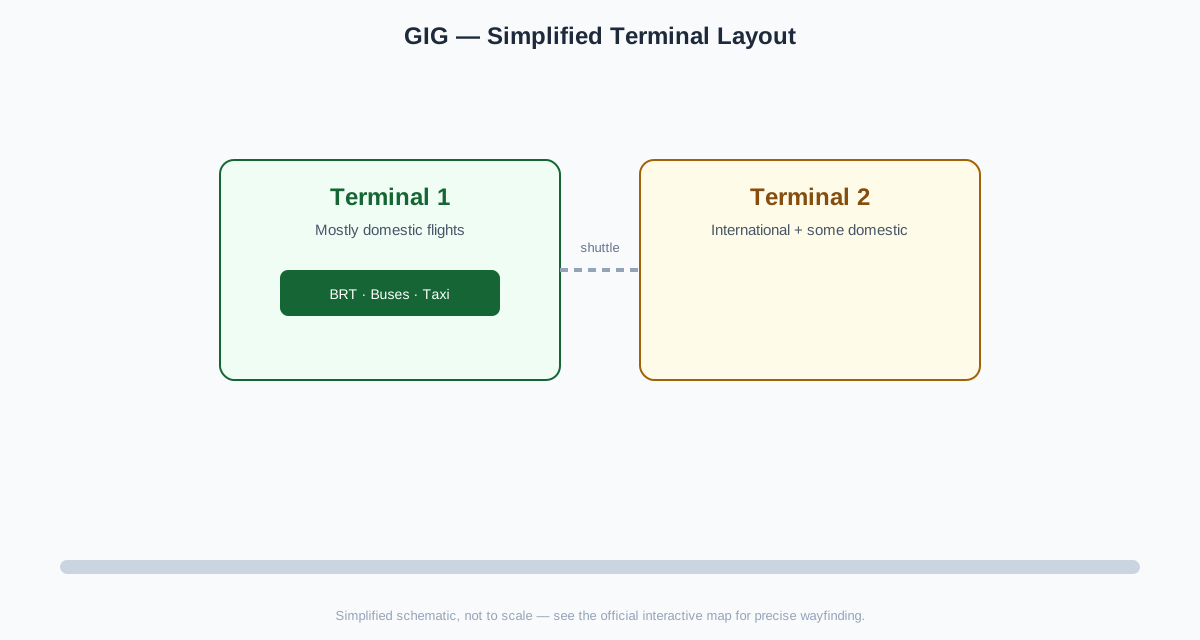
This is a simplified layout to help you get oriented — for current terminal information, see the official RIOgaleão site.
Useful Links
- Official airport site (RIOgaleão) — terminal info, services, flight status.
- Real Auto Ônibus — airport coach routes and schedules.
Long Layover Tips
- With 4+ hours and a visa situation that allows entry, Rio’s beach neighborhoods (Copacabana, Ipanema) are reachable via the airport coach or a taxi — but factor in Rio’s often heavy traffic when planning your return.
- If staying airside, Terminal 2’s international departures area has the best mix of seating and food options for a longer wait.
- Lounge access is worth prioritizing here if you have it — seating and rest options in the general terminal areas are more limited than at some larger hubs.
Related airports
 ATL
ATL Atlanta Hartsfield-Jackson Airport: The World's Busiest Airport Train
Atlanta, United States
Atlanta's Hartsfield-Jackson runs the world's busiest airport train. Transport into the city, security wait times, parking, wifi, and lounges covered.
 BOG
BOG Bogotá El Dorado Airport: One of the World's Highest Major Airports
Bogotá, Colombia
Bogotá's El Dorado sits nearly 2,550 meters above sea level. Transport into the city, security wait times, parking, and lounges.
 BSB
BSB Brasília Airport: Landing in a City Shaped Like an Airplane
Brasília, Brazil
Brasília's airport serves a UNESCO-listed modernist capital deliberately laid out in the shape of an airplane. Transport, security, and lounges.