Seattle-Tacoma Airport: America's Secret Shortcut to Asia
Seattle-Tacoma International Airport (SEA) — Seattle, United States
Published September 5, 2026

SEA
IATA code
52.6M (2024)
Passengers
1 (Central + Satellite Concourses)
Terminals
23 km
To city center
Only here
America's secret shortcut to Asia
Seattle-Tacoma's location gives it some of the shortest flight times from anywhere in the US mainland to Asia, thanks to great-circle polar routes that curve up over the north Pacific. That geographic advantage has made SEA one of the country's most important gateways to the Asia-Pacific region, despite Seattle not being one of America's largest cities.
Getting there, at a glance
Link light rail
~$3
~35–40 min
Direct to downtown Seattle
Rideshare
~$35–50
~25–35 min
Depending on traffic
Taxi
~$40–55
~25–35 min
Metered, widely available
✈️ What kind of flight are you taking?
Arrive at the airport
2 hours
Typical security wait
15–20 min
Peak-hour wait
25–40 min
Amenities, at a glance
Wifi
Free, unlimited
Lounges
Alaska Lounge + Priority Pass
Duty-Free
Pacific Northwest coffee, local gifts
Dining
Pacific Northwest cuisine, local coffee roasters
Hotel
None on-site; Radisson across the street
Book & Save
These are affiliate links — we may earn a commission if you book through them, at no extra cost to you.
Seattle-Tacoma International Airport (IATA: SEA) is the Pacific Northwest’s main gateway and Alaska Airlines’ largest hub, with more than 52 million passengers a year. It sits about 23 km south of downtown Seattle.
Overview
SEA operates a central terminal connected to satellite concourses and holds a genuinely valuable geographic advantage: its location gives it some of the shortest flight times from anywhere in the US mainland to Asia, thanks to great-circle polar routes that curve up over the north Pacific. That advantage has made SEA a critical Asia-Pacific gateway despite Seattle not being one of America’s largest metro areas — a reflection of geography mattering as much as population. SEA set a new annual record with 52.6 million passengers in 2024, edging past 2019’s pre-pandemic peak of 51.8 million.
Terminals
SEA operates a Central Terminal connected by an underground train to satellite concourses (A, B, C, D, N, and S), handling the full scope of Alaska Airlines’ hub operations alongside Delta’s significant West Coast presence.
Airlines
Alaska Airlines operates its largest hub at SEA, running an extensive network across the western United States, Hawaii, and increasingly international destinations. Delta Air Lines also maintains a major hub here, adding substantial domestic and international capacity, particularly to Asia given the airport’s favorable polar-route geography.
Getting There
- Link light rail: ~$3, a direct line to downtown Seattle, about 35–40 minutes.
- Rideshare: ~$35–50 depending on traffic, about 25–35 minutes.
- Taxi: Metered, typically ~$40–55, widely available, about 25–35 minutes.
Prices above are approximate and subject to change — always check current fares with Sound Transit or your rideshare app.
Security and Passport Control Wait Times
- Domestic flights: Security only. Typically 15–20 minutes during off-peak hours, up to 25–40 minutes during busy periods.
- International flights: Security plus passport control. Typically 25–35 minutes during off-peak hours, up to 40–55 minutes during peak international departure banks.
- Given SEA’s significant Asia-Pacific international traffic, international departure banks can see notably longer lines than the domestic side.
Parking
The terminal has extensive short- and long-stay parking, with clear signage. Booking online ahead of arrival is cheaper than the walk-up rate.
Wifi
Free, unlimited wifi is available throughout the airport with no time limit.
Best Times to Arrive
- Domestic flights: Arrive 2 hours before departure.
- International flights: Arrive 3 hours before departure, especially during peak Asia-Pacific departure banks.
- Given SEA’s role as a major transpacific gateway, international connections here can involve significant walking between satellite concourses — factor in real transfer time.
Where to Eat
SEA has an excellent selection of Pacific Northwest cuisine and locally roasted coffee spread across its concourses — a fitting reflection of Seattle’s coffee culture.
Airport Hotel
SEA doesn’t have a hotel built into the terminal. The Radisson Hotel Seattle Airport sits directly across the street with a free shuttle, and the Seattle Airport Marriott is less than a mile away with the same — both genuinely convenient for an early transpacific departure.
Lounges
- The Alaska Lounge is available for eligible business class passengers, elite status holders, or paid access.
- Several Priority Pass-affiliated lounges are also available.
Duty-Free Shopping
SEA’s shopping area includes genuinely Pacific Northwest specialties — local coffee and regional gifts — alongside the usual international fashion, cosmetics, and electronics brands.
Airport Map
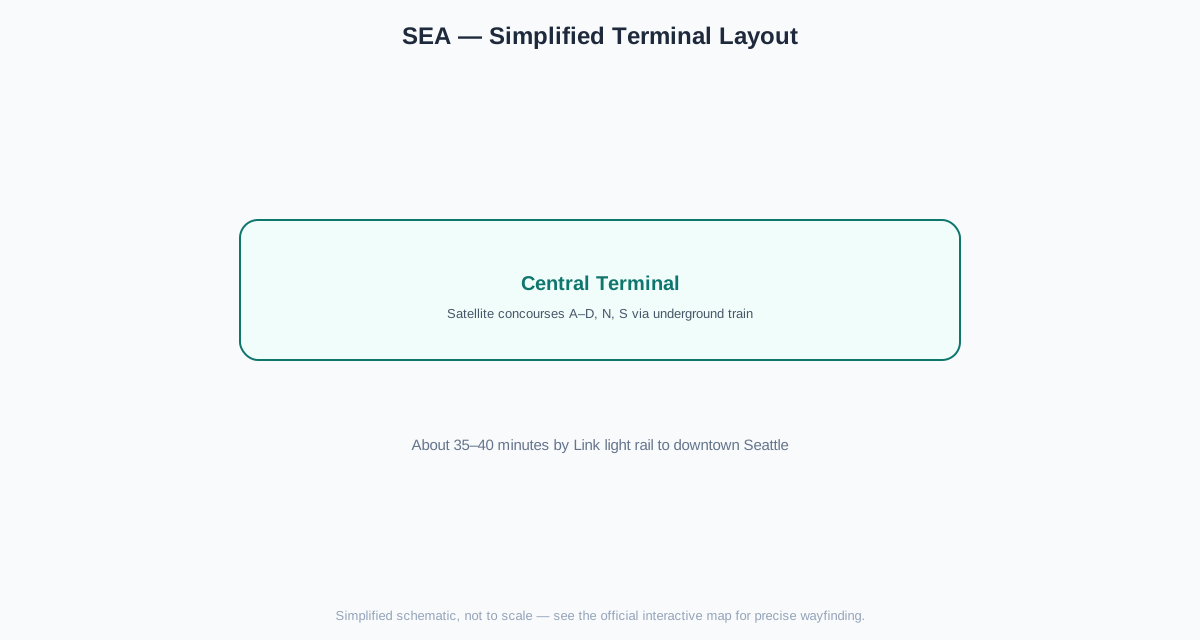
This is a simplified layout for orientation — for precise gate-by-gate navigation, use the official Sea-Tac Airport resources.
Useful Links
- Official airport website (Seattle-Tacoma International Airport) — terminal information, services, live flight status.
- Sound Transit — Link light rail fares and schedules.
Layover Tips
- With 5 hours or more, downtown Seattle and Pike Place Market are reachable via Link light rail in about 35–40 minutes.
- If staying airside, SEA’s local coffee roasters are a genuine step up from typical airport coffee — worth seeking out even on a short connection.
- Given SEA’s role as a transpacific gateway, allow real time for the underground train between satellite concourses on international connections — the walk alone can take longer than expected.
Related airports
 ATL
ATL Atlanta Hartsfield-Jackson Airport: The World's Busiest Airport Train
Atlanta, United States
Atlanta's Hartsfield-Jackson runs the world's busiest airport train. Transport into the city, security wait times, parking, wifi, and lounges covered.
 BOG
BOG Bogotá El Dorado Airport: One of the World's Highest Major Airports
Bogotá, Colombia
Bogotá's El Dorado sits nearly 2,550 meters above sea level. Transport into the city, security wait times, parking, and lounges.
 BSB
BSB Brasília Airport: Landing in a City Shaped Like an Airplane
Brasília, Brazil
Brasília's airport serves a UNESCO-listed modernist capital deliberately laid out in the shape of an airplane. Transport, security, and lounges.