Dublin Airport: Home to Half the World's Leased Aircraft
Dublin Airport (DUB) — Dublin, Ireland
Published August 13, 2026
DUB
IATA code
33.3M (2024)
Passengers
2
Terminals
10 km / 6 mi
To city center
Only here
Home to half the world's leased aircraft
Ireland has become the global center of the aircraft-leasing industry, and more than half of the world's leased commercial aircraft are managed by companies headquartered around Dublin — a genuinely surprising fact for a country of Ireland's size.
Getting there, at a glance
Dublin Bus / Aircoach
€7–10
~30–40 min
Multiple routes into the city
Taxi
€30–40
~25–35 min
Widely available
Uber
Comparable to taxi
~25–35 min
Widely used in Dublin
✈️ What kind of flight are you taking?
Arrive at the airport
2 hours
Typical security wait
15–25 min
Peak-hour wait
30–45 min
Amenities, at a glance
Wifi
Free, unlimited
Lounges
Aer Lingus Lounge + Priority Pass
Duty-Free
Irish whiskey, wool goods
Dining
Irish pub food, international chains
Hotel
Clayton/Radisson, free shuttle
Book & Save
These are affiliate links — we may earn a commission if you book through them, at no extra cost to you.
Dublin Airport (IATA: DUB) is Ireland’s busiest airport and the primary base for both Aer Lingus and Ryanair, handling more than 32 million passengers a year. It sits about 10 km (6 mi) north of central Dublin.
Overview
DUB operates two terminals and functions as Ireland’s main international gateway, with an outsized role in global aviation that goes well beyond passenger numbers: Ireland is the world center of aircraft leasing, and the majority of the planet’s leased commercial aircraft are managed by companies based around Dublin — a quiet but massive industry most travelers never notice. DAA, the airport operator, reported 33.3 million passengers through Dublin’s terminals in 2024, a 4% increase on 2023 that pushed the airport past its regulatory passenger cap.
Terminals
- Terminal 1: Primarily Ryanair and other budget carriers, plus some Aer Lingus flights.
- Terminal 2: Aer Lingus’s main terminal and other full-service international carriers.
Airlines
Aer Lingus, Ireland’s flag carrier, operates its main base at DUB with an extensive European network plus growing transatlantic routes to North America. Ryanair, Europe’s largest budget carrier, also uses Dublin as its largest base, operating an enormous short-haul network across Europe. Together they make DUB one of the best-connected airports in Europe for both full-service and budget travel.
How to Get There
- Dublin Bus / Aircoach: €7–10, with multiple routes covering different parts of the city, about 30–40 minutes.
- Taxi: Typically €30–40 to the city center, about 25–35 minutes depending on traffic.
- Uber: Generally comparable in price to a taxi, about 25–35 minutes — widely used in Dublin.
Prices above are indicative and can change — always check current fares with Dublin Bus or your ride-hailing app.
Getting Through Security and Passport Control
- European flights: Security only for most EU/UK routes. Typically 15–25 minutes off-peak, up to 30–45 minutes during Ryanair and Aer Lingus’s busy morning and evening waves.
- International flights: Security plus passport/immigration control. Typically 25–40 minutes off-peak, up to 45–65 minutes during peak transatlantic departure banks.
- DUB handles an enormous volume of short-haul departures given Ryanair’s base here — expect efficient but high-volume processing during peak periods.
Parking
Both terminals have adjacent short- and long-stay car parks, plus more affordable off-site options connected by shuttle. Pre-booking online is cheaper than the walk-up rate.
Wifi
Free, unlimited wifi is available across both terminals with no time limit.
Best Times to Arrive
- European flights: Arrive 2 hours before departure, especially during Ryanair’s high-volume banks.
- International flights: Arrive 3 hours ahead, especially for Aer Lingus’s transatlantic departures.
- Given Ryanair’s huge base here, security can get genuinely busy during peak morning waves — don’t underestimate a budget short-haul flight’s security queue.
Where to Eat
DUB has a good selection of Irish pub-style food alongside international chains, spread across both terminals.
Airport Hotel
DUB doesn’t have a hotel built into the terminal itself, but two options sit just outside with free 24-hour shuttles: the Clayton Hotel Dublin Airport Central, about an 8–10 minute walk or a short shuttle hop from Terminal 2, and the Radisson Blu Hotel, Dublin Airport, reachable the same way. Both are genuinely convenient for an early departure without needing a taxi into the terminal.
Lounges
- The Aer Lingus Lounge is available in Terminal 2 for eligible business class passengers, elite status holders, or paid access.
- Several Priority Pass-affiliated lounges are also available.
Duty-Free Shopping
DUB’s duty-free zone includes genuine Irish specialties — whiskey and wool goods — alongside the usual international fashion, cosmetics, and electronics brands.
Airport Map
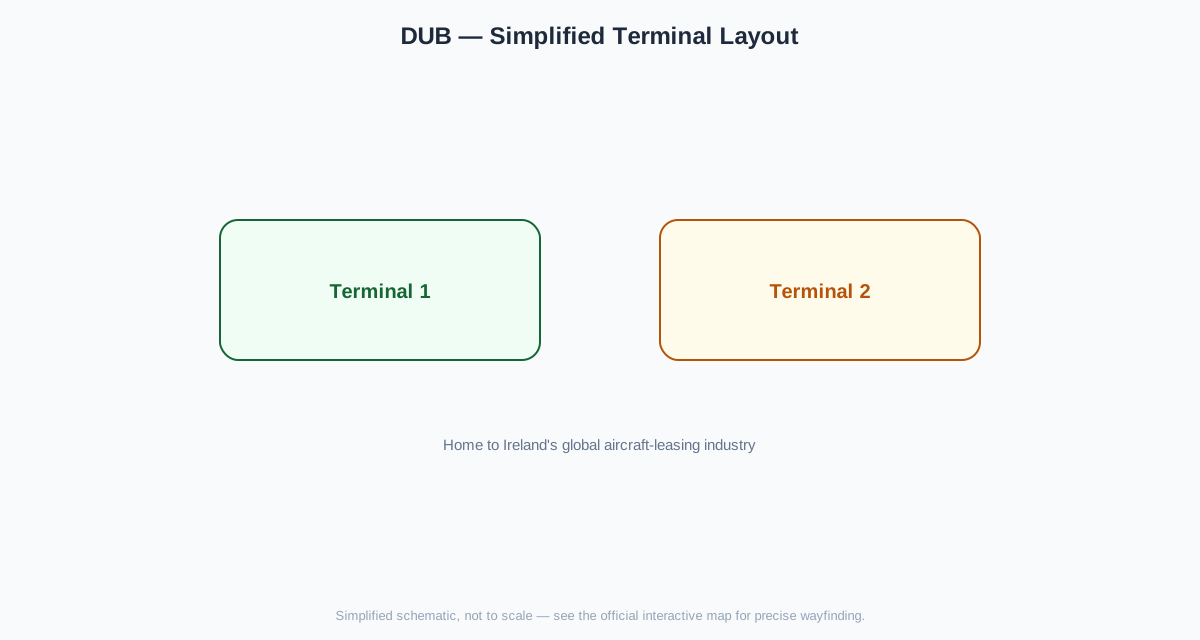
This is a simplified layout to help you get oriented — for real-time, gate-by-gate wayfinding, use Dublin Airport’s official resources.
Useful Links
- Official airport site (Dublin Airport) — terminal info, services, live flight status.
- Dublin Bus — routes and fares.
Long Layover Tips
- With 4+ hours and a visa situation permitting entry, central Dublin’s Temple Bar and Trinity College are reachable by bus in about 30–40 minutes.
- If staying airside, Terminal 2 has the best mix of lounges and dining given Aer Lingus’s presence.
- Given how much of the world’s aircraft-leasing business is quietly headquartered around Dublin, it’s worth appreciating that this relatively modest-sized airport plays an outsized role in how the entire global airline industry gets its planes.
Related airports
 ATH
ATH Athens Airport: A Real Archaeological Museum Built From What They Dug Up
Athens, Greece
Athens Airport has a genuine archaeological museum showing artifacts unearthed during its own construction. Transport, security, and lounges.
 AMS
AMS Amsterdam Schiphol Airport: Home to a Museum Inside the Terminal
Amsterdam, Netherlands
Schiphol has its own art museum annex inside the terminal. Here's how to get into Amsterdam, clear security fast, and make the most of a layover.
 BCN
BCN Barcelona-El Prat Airport: Grab a Window Seat for the Mediterranean Approach
Barcelona, Spain
Everything for a smooth trip through Barcelona-El Prat — that Mediterranean coastal approach, transport into the city, security times, and lounges for your layover.